Carry No Burden
Carry No Burden is an interactive sound sculpture commissioned by Fundacja Zapomniane as part of a commemoration ceremony held in Poland's Chodówki Forest, where over 600 Jews were murdered and buried in mass graves during the Holocaust. The work is my latest response to the question of how to engage with sites of trauma through sound, which I've been asking myself since moving to Poland seven years ago.
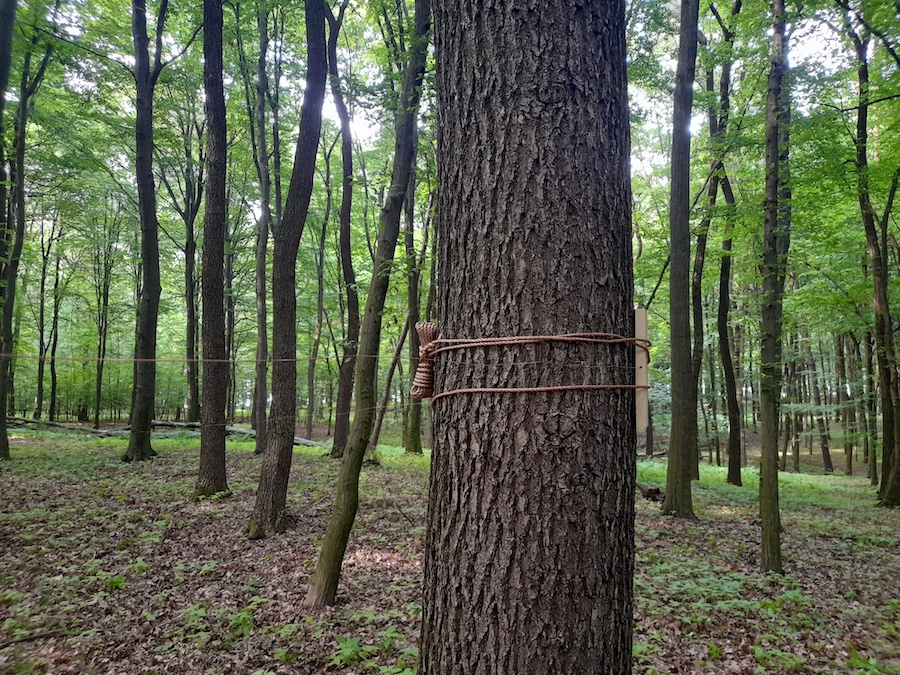
The concept stems from the requirement in Jewish law to mark the boundaries of graves (which in this case are otherwise invisible in the landscape), and also the idea of an eruv—a symbolic enclosure that extends the sacred space of the home into the public realm on the Sabbath.
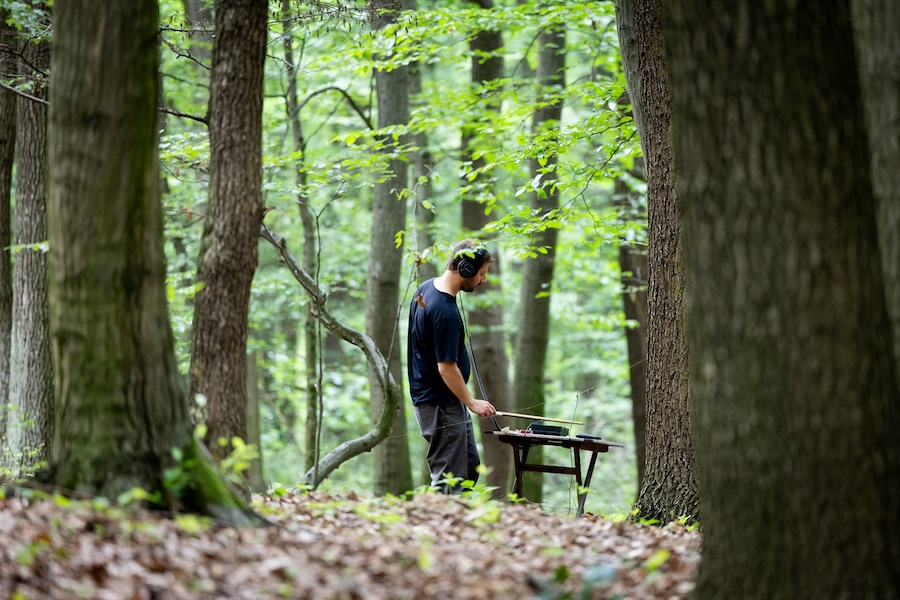
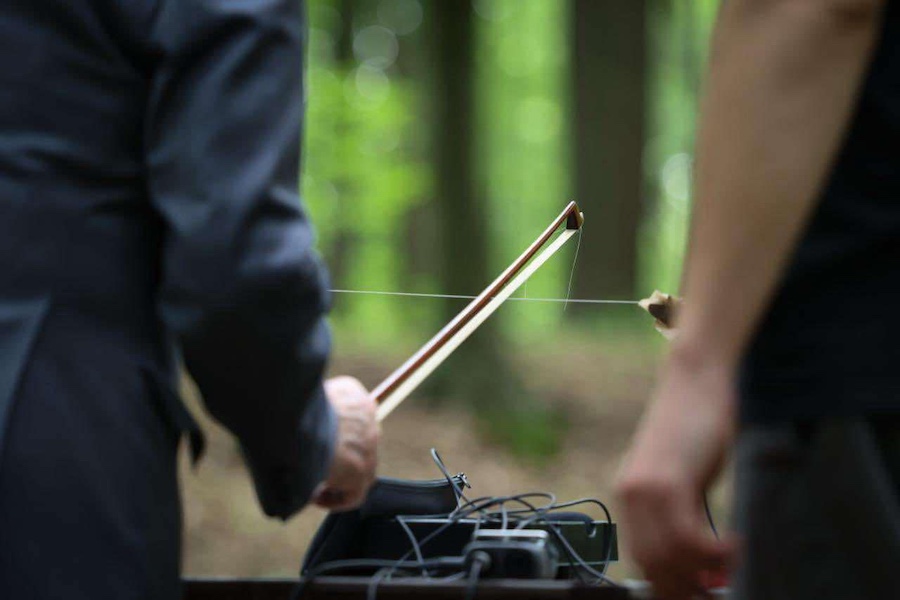
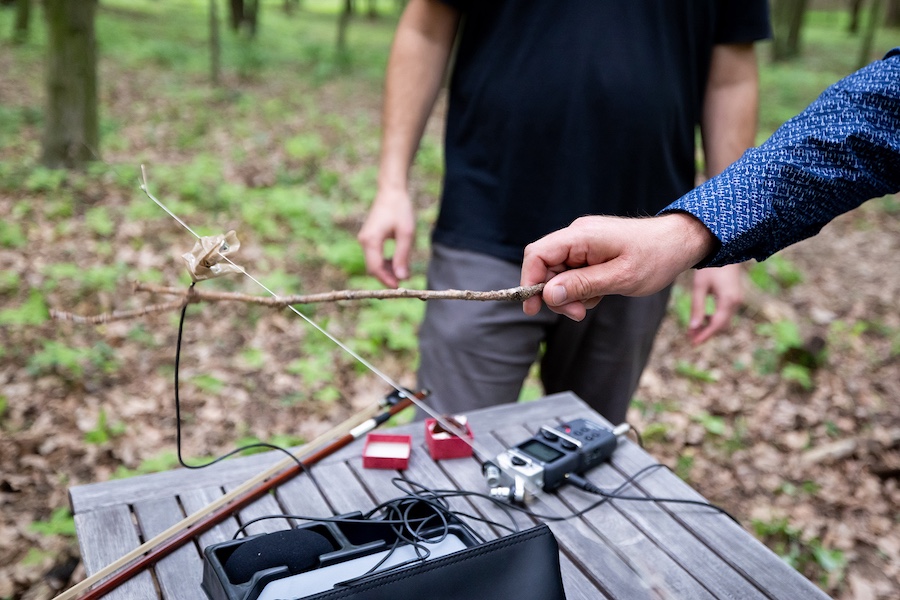
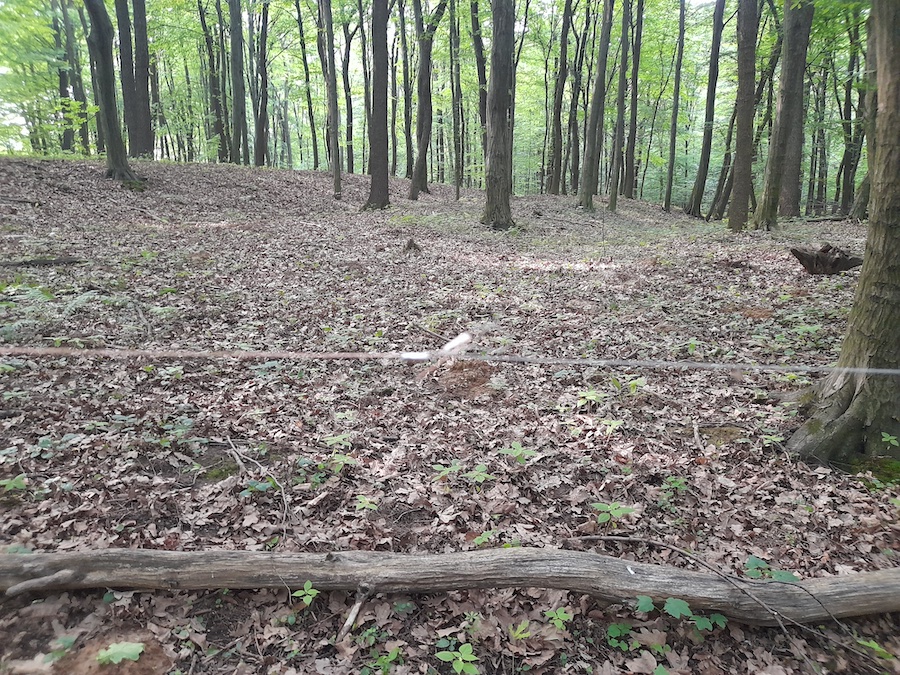
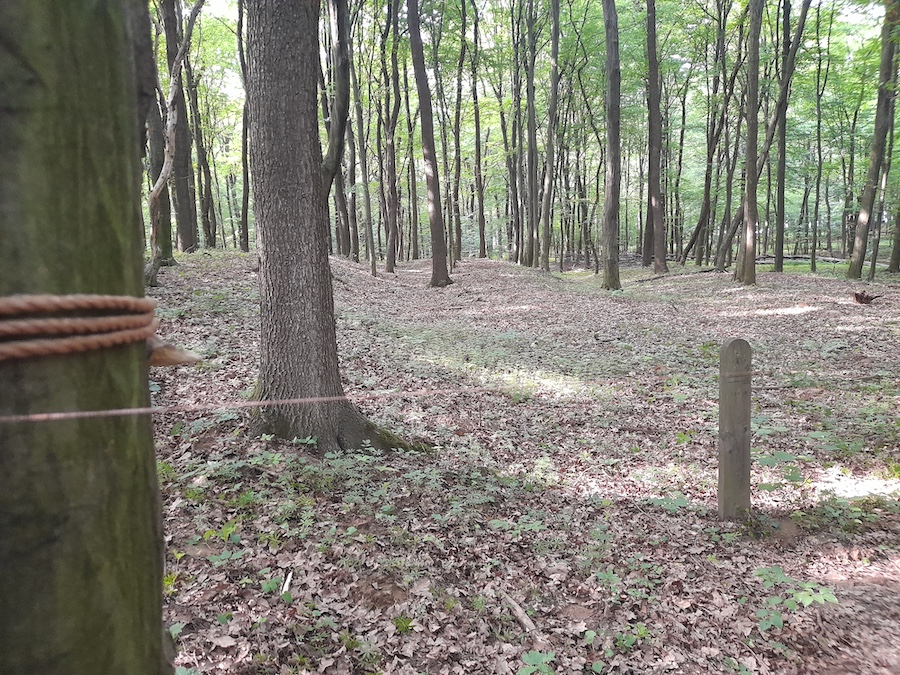
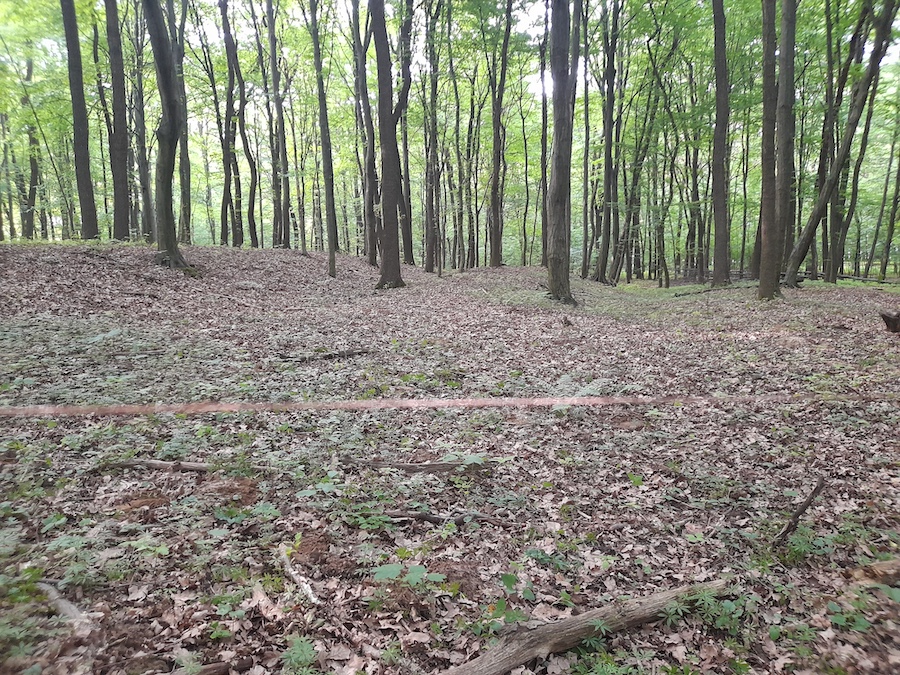
A 150-metre-long eruv encircles the three mass graves, made of guitar strings (from my own guitar) and wire stretched between trees. Movingly, this was the first time the scale of the burial site had been made clearly visible. Members of the local community were invited to interact with the installation, recording sounds from the strings under the influence of wind, movement, and touch. Thus the forest was transformed into a large-scale musical instrument—a resonator of history, as it were—and the eruv reimagined as an acoustic perimeter of remembrance rather than a legal boundary. The sounds we recorded—barely audible to the naked ear, fragile, yet rich in overtones— will become the basis of a new composition which will feed into Fundacja Zapomniane's ongoing commemorative activities.